

Antalya, Türkiye – 17 November 2026 – 4-H Nepal, with the support of the International Organization for Migration (IOM), successfully organized a high-level side event at the 31st UN Climate Change Conference (COP31) in Antalya, Türkiye. The event spotlighted the urgent challenges of climate-driven youth migration and the resulting cultural loss in the Himalayan region.
Titled “Youth Mobility & Cultural Loss in the Himalayas: Climate-Driven Exodus and Solutions,” the side event took place at the IOM Pavilion in the COP31 Blue Zone. It brought together international climate experts, migration specialists, researchers, and youth advocates to examine the critical links between climate change, youth mobility, cultural heritage, and sustainable livelihoods in mountain communities.

The session featured a key presentation by Lok Raj Awasthi, Founder Chairperson of 4-H Nepal and a youth and climate expert. In his paper presentation, Awasthi highlighted the rising trend of collective youth migration from Himalayan communities. He stressed that youth outmigration is not merely about individuals leaving their homes—it represents the gradual erosion of local knowledge systems, cultural traditions, community identity, and the long-term future of mountain societies.
Awasthi noted that climate-related challenges, limited economic opportunities, inadequate access to quality education and healthcare, and growing livelihood insecurity are forcing young people to leave their ancestral communities in search of security. He called for youth mobility to be recognized as both a climate justice and sustainable development issue, urging meaningful participation of young people in decision-making processes from local to international levels. He further appealed to the international community for immediate action to address climate impacts in Nepal’s Himalayan and mountain regions and to strengthen locally led adaptation and resilience initiatives.
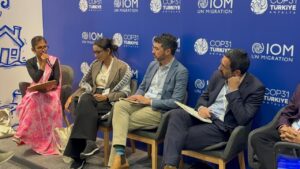
Global Experts Join the Discussion
The panel discussion featured distinguished international experts:
- Chris Richter, Regional Migration, Environment and Climate Change Specialist for Asia and the Pacific at IOM, shared insights on IOM’s collaboration with the Government of Nepal to promote safe, orderly, and well-managed migration. He highlighted ongoing efforts to strengthen migration governance and ensure fair working conditions for Nepali migrant workers, while reaffirming IOM’s readiness to support Nepal in developing and strengthening its migration policies.
- Lorenzo Guadagno, Climate Change and Disaster Risk Expert at the Santiago Network Secretariat, expressed concern over the intensifying impacts of climate change in Nepal. He emphasized the importance of international cooperation on climate-related loss and damage and noted the Santiago Network’s role in facilitating technical assistance for vulnerable developing countries, including planned engagement with Nepal for 2027.
- Saba Noureen, researcher and advocate on climate change and human security, provided perspectives on the impacts of climate change across the Hindu Kush Himalayan region, particularly on young people and communities whose livelihoods, cultural practices, and traditional ways of life are under increasing pressure.
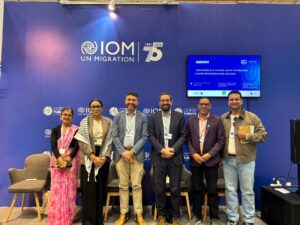
The discussion explored the drivers of youth outmigration from Himalayan communities, the social, cultural, and economic assets lost as a result, and pathways through climate adaptation, community resilience, and sustainable livelihood opportunities that can enable young people to remain and thrive in their home communities.
Moderated by Susmita Adhikari, a youth advocate, the event brought together climate experts and advocates from Canada, Switzerland, Türkiye, Japan, Italy, Bangladesh, Nepal, Pakistan, and other countries.
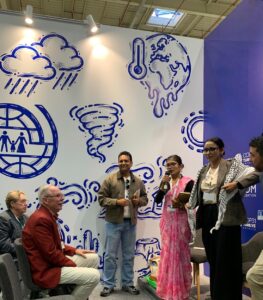
Commitment to Himalayan Youth and Climate Justice
Through this initiative, 4-H Nepal reaffirmed its strong commitment to amplifying the voices of Himalayan youth, advancing climate justice, and promoting sustainable, inclusive, and resilient mountain communities at national, regional, and global levels.
The side event underscored the urgent need to integrate youth mobility into climate policies, strengthen climate-resilient livelihoods, protect indigenous and local knowledge, and ensure that young people from vulnerable mountain communities have a meaningful voice in global climate negotiations.